








Description
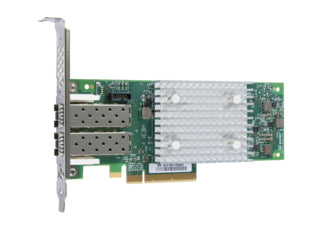
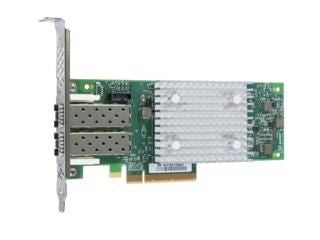
SN1100Q 16Gb Dual Port Fibre Channel Host Bus Adapter
If using virtual servers, realize each server will generate their I/O that could overrun an Ethernet network but would be accelerated on a Fibre Channel SAN network.
Sharing a high-speed storage array helps maximize HPE ProLiant servers and their associated application performance while allowing storage management tasks to be performed on one storage device — not repetitive storage tasks at each HPE ProLiant.
Data delivery is performed with extra features designed to automate error correction to prevent delivery retries.
While the Fibre Channel protocol can securely deliver data on a connection, Fibre Channel also allows multiple physical connections from server to storage to reduce potential downtime from issues such as bad or unplugged cables, faulty connectors, faulty switch ports or weak storage controllers.
If physical servers are not part of the expansion strategy, virtual servers can be introduced with similar ease with products like VMware vSphere Storage vMotion where, for example, you can move multiple virtual machines onto a new server in the SAN.
What is new supporting point:
Lowest entry point to any SAN configuration
Reasons To Buy
SAN Delivers a Compounding Set of Application and Storage Benefits
Implement a high-performance SAN data connection for improving database performance and their applications.If using virtual servers, realize each server will generate their I/O that could overrun an Ethernet network but would be accelerated on a Fibre Channel SAN network.
Sharing a high-speed storage array helps maximize HPE ProLiant servers and their associated application performance while allowing storage management tasks to be performed on one storage device — not repetitive storage tasks at each HPE ProLiant.
The Fibre Channel protocol is the most secure method to deliver data
The SN1100Q 16Gb HBA uses Fibre Channel as the data transport protocol. That protocol has no IP address and requires other devices to use the Fibre Channel protocol. This protocol helps eliminate any outside communications making it impervious to outside attacks.Data delivery is performed with extra features designed to automate error correction to prevent delivery retries.
While the Fibre Channel protocol can securely deliver data on a connection, Fibre Channel also allows multiple physical connections from server to storage to reduce potential downtime from issues such as bad or unplugged cables, faulty connectors, faulty switch ports or weak storage controllers.
Expand or Contract the SAN as Needed
A Fibre Channel SAN allows for the introduction of additional HPE ProLiant servers if there are available active Fibre Channel switch ports. Generally, an HPE ProLiant server can be introduced, configured, and booted without disruption to the existing devices.If physical servers are not part of the expansion strategy, virtual servers can be introduced with similar ease with products like VMware vSphere Storage vMotion where, for example, you can move multiple virtual machines onto a new server in the SAN.
Description
Is your remote office, department or company looking to consolidate data spread across multiple HPE ProLiant servers into a highly reliable and affordable SAN? There are many benefits to a consolidated storage strategy. The HPE SN1100Q 16Gb Host Bus Adapters (HBAs) build a Fibre Channel connection when installed into an HPE ProLiant server and cabled to a switch and storage device. Multiple physical HPE ProLiant servers and/or virtual servers can be routed using a Fibre Channel switch to an HPE storage array such as the HPE MSA, HPE Nimble Storage or HPE Alletra storage devices. This level of consolidation concentrates storage management on one storage device and provides an equally powerful and reliable connection for each server and its applications. Additionally, an onsite data protection device such as a disk or tape backup can leverage the same Fibre Channel infrastructure helping eliminate slow over-the-network backups.What is new supporting point:
Lowest entry point to any SAN configuration
Specifications
| Ports & interfaces | |
|---|---|
| Internal | Yes |
| Fiber optic connector | SFP+ |
| Interface | Fiber |
| Host interface | PCI |
| Connectivity technology | Wired |
| Bandwidth | |
| Maximum data transfer rate | 16 Mbit/s |
| Technical details | |
| Compatible products | HPE ProLiant ML and DL Gen10 and Gen10 Plus servers ; Most HPE ProLiant Gen10 and Gen10 Plus Servers ; HPE ProLiant platforms Refer to server QuickSpecs for details regarding option support. |
| Harmonized System (HS) code | 85176990 |
| Network | |
| Maximum data transfer rate | 16 Mbit/s |
| Design | |
| Compatible products | HPE ProLiant ML and DL Gen10 and Gen10 Plus servers ; Most HPE ProLiant Gen10 and Gen10 Plus Servers ; HPE ProLiant platforms Refer to server QuickSpecs for details regarding option support. |
| Internal | Yes |
| Component for | Server |
| System requirements | |
| Compatible operating systems | None |
| Weight & dimensions | |
| Width | 216 mm |
| Depth | 305 mm |
| Height | 114 mm |
| Weight | 680 g |
| Performance | |
| Compatible products | HPE ProLiant ML and DL Gen10 and Gen10 Plus servers ; Most HPE ProLiant Gen10 and Gen10 Plus Servers ; HPE ProLiant platforms Refer to server QuickSpecs for details regarding option support. |
| Other features | |
| Compatible operating systems | None |
| Harmonized System (HS) code | 85176990 |
| Logistics data | |
| Harmonized System (HS) code | 85176990 |